….on….bored with color….

Is there such a thing as too much color?
In a world where saturated color and manipulated images have become the norm is black and white more real?
In our so-called modern society, and culture, image saturation is not only 360 degrees around us but also gets embedded in us as it’s imprinted on our minds. Technology now is primarily image based and all of it is in color; brilliant, vibrant, glowing, saturated color. Printed matter whether publications or advertising is 99% image-based.
Is there such a thing as too many images?
By having so many images do we become desensitized to the image and color?
Or, are we still in the process of becoming desensitized?
How much is too much?
I read a recent article in a publication that people today prefer to look at art online than actually going to a museum. Does this devalue art?
 

Well, these are just some of the things floating around in that vast empty space between my ears….. I had these thoughts as I have found that color images no longer interest me. I’ve gotten bored with images – specifically color images….. As a result, all my newer work is strictly in B&W. For me B&W feels more real. I find greater nuances in the images when I’m working in B&W. The image in B&W does not bore me – it makes me look closer. Will that change? Probably, at some time. But then, again, maybe not as long as our world is – the way it is.

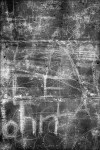
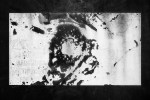
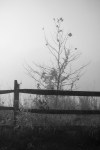
Here are some recent B&W images I’ve created. Enjoy.
As always you can click on an image for a larger view and then use the arrows to advance to next image.

… on “thin ice”…

As many of you know visually, I “see” in abstract.   It’s just the way my mind works.  Some people see gorgeous sweeping mind altering landscapes but I like to get to the “nitty-gritty” of things.   Looking at the common in a way that makes people stop, question, and consider what they are looking at and how they feel about it.

Abstraction is often confused with surrealism but it is not the same thing.  Surrealism, in my opinion has more to do with pictorialism.  Surrealism shows easily recognizable things in fantastical setting[s] setting up uncommon and at times illogical relationships.  Abstraction on the other hand tends to zoom in on details to the point that the viewer is not sure what they are looking at.  It purposefully alters either in presentation, or creative manipulates the subject to the point of no return focusing on shapes, lines, patterns and spaces which results in more of an emotional/psychological connection for the viewer.  Even if the viewer dismisses the work as balderdash, crap, f’d up, worthless, pointless, etc,  they still have had an emotional response to the work.

The two series I am posting today are examples of my abstract way of seeing nature.  This latest project focuses on images from a frozen lake.  This first series involves subtle manipulation of the image by increasing contrast, desaturating color etc.  It consists of 6 images simply titled Lake Ice #1 – #6.

The second series is the result of trying to figure out what to do with the “bad photos” from that frozen adventure.  I always try to salvage my so-called bad images.  And that salvage process usually involves manipulating them to the point of oblivion.  This series is titled LAKE ICE EXTREME #1-#9 and tells us some valuable things.

  1. There are more “bad” photos than good ones (that’s why there’s 9 in this series and only 6 in the previous series.)

  2. The acronym for this series is L.I.E.  which basically says that what you are looking at is a lie of the mind caused by extreme manipulation of crop, color and exposure.

  3. While you may not recognize what you are seeing; I think we need to ask ourselves, “What is missing?”, “Does what’s missing matter?”, “Out of sight, out of mind?”, and “How does this increase or change our understanding of nature and the world around us?”  And those are questions each individual has to answer for themselves.

  4. Other considerations are “Why square?” – I was able to crop out a lot of the unmanageable parts of the image and the square crop helps us center our focus (in this instance).

  5. Color is a tricky thing.  If I’d left it natural they all would have been a dirty blue with some brownish tones and white.  When I decided to change the color to make the image a little more disorienting  I was surprised to find that each individual image had its color preference.  For example if the image is green (as in #) it’s because that’s the only color that “felt” right.  Honestly the red/purple/blue/yellow options just didn’t fit.   I always find it amazing how once you get started  the artwork seems to dictate it’s own color palette.   I’m curious if painters and other artists feel the same.

  6. I also envision these 9 images displayed together in the following configuration.

    (you can “right click” then open in a “new tab” to view larger versions of individual images for more details.)

Ornette…

ASKING & HEARING

ASKING & HEARING

A photo-based digital creation.
Asking & Hearing – posted as a tribute to the late Ornate Coleman 9 Mar 1930 – 11 Jun 2015.
Cheers to the man who showed us “THE SHAPE OF JAZZ TO COME”. He also taught us that the “CHANGE OF THE CENTURY” would affirm “WHEN TOMORROW IS THE QUESTION!” and answer “FREE JAZZ” and involve “THE ART OF THE IMPROVISERS”. Right up to the end he espoused “THE NEW VOCABULARY.” Thank you for teaching us the “DANCING IN YOUR HEAD” and opening our eyes and ears to all of life’s possibilities “IN ALL LANGUAGES”.

“The idea is that two or three people can have a conversation with sounds, without trying to dominate it or lead it,” Coleman said in a 1997 interview with the French philosopher Jacques Derrida.

“What I mean is that you have to be — intelligent,” he said.

“I think the musicians are trying to reassemble an emotional or intellectual puzzle, in any case a puzzle in which the instruments give the tone.”

He had a notorious relationship with music labels. His groundbreaking works were considered on the cutting edge and he had little patience for the industry’s business side. “I’ve never had a relationship with a record executive. I always went to the record company (because of) someone that liked my playing. Then they would get fired, and I’d be left with the record company,” Coleman told Cadence Magazine in 1995.

For more info:
https://www.facebook.com/officialornettecoleman/
http://ornettecoleman.com
http://artdaily.com/news
https://en.wikipedia.org/wiki/Ornette_Coleman