It's been said, "necessity is the mother of invention".   No one knows exactly who said that but some site Mark Twain.   That quote evolved from, of all people, Plato who said, "Our need will be the real creator".

I would like to further modify that and say limitation is the mother of invention or the real creator.

Often we think of limitations imposed on us by others (i.e. parents, authorities, governing bodies, social norms etc.) but there is another self imposed limitation and that is the direction I'm moving in with my image making.   Before my camera work has always been shot in the 3:2/4:6 frame format and if I wanted something different I would crop that raw file before moving further in the editing phase.

I've decided to upend that by only shooting in 1:1 frame format.    Yesterday and today were my first days limiting myself in this way.   It's interesting how looking at the view screen and seeing only a square image changes how you think about seeing.    In some ways it's changed my subject matter.  In other ways it's changed how I photograph the same old subjects  that I would photograph before in the more familiar landscape/portrait format.  I'm still interested in the same things it's just that I am seeing them differently.    And it's not like I see them one way and they deliberately change how I want to see them via cropping.   I'm actually forcing myself to see them squared.

I don't know how long I'll do this but it will be for some length of time to see how this will change the way I see and perceive things over time as I get more used to this square format.

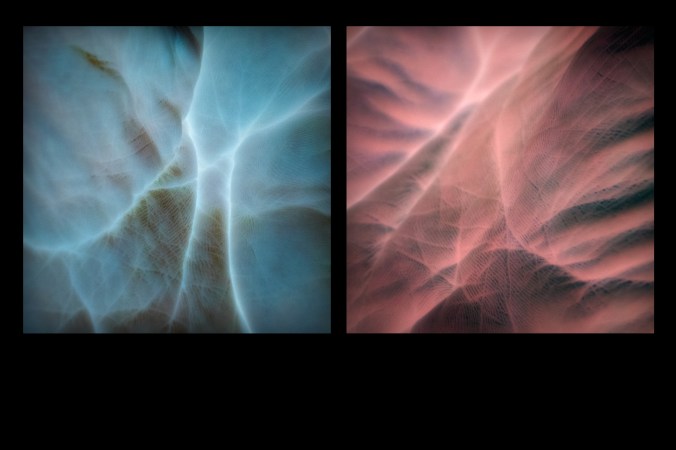
Todays images are of palms of my left and right hand.  An abstract, inverted presentation that I find interesting.    Again these images were shot square format /raw.   Editing in Photoshop.
I’ve always loved when classical collides with composers and performers in other genres like rock, pop, jazz etc. I recently purchased L.I.T.A.N.I.E.S. with music by classical composer Nicholas Lens and lyrics by alt. rock icon Nick Cave. 12 tracks of pure magic. I was completely transfixed while listening. From the opening notes I felt compelled to quietly sit and listen to the entire album. Enjoy this track LITANY OF THE FORSAKEN.
Recently I’ve been thinking about prayer and how religious organizations are capitalizing on and exploiting peoples weakness during the corona virus to convert new believers, claims of healing, surviving etc.
Yesterday I just started to write down some thoughts in my journal.
It doesn’t rain because you pray, The sun doesn’t shine because you pray. Disaster doesn’t spare you, your friends or family because you pray. Yo don’t recover from illness because you pray. You don’t enjoy good health because you pray. Your enemies don’t suffer because you pray and you don’t suffer because others pray.
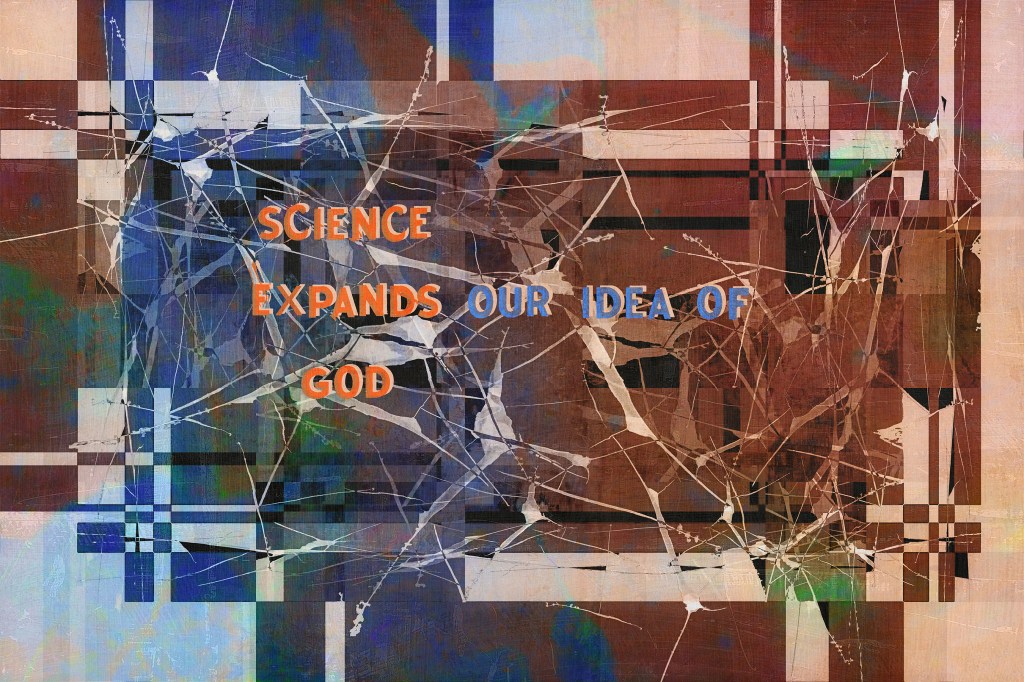
You created God and now you’re unhappy with your creation. What was once the domain of religion is now the domain of science. Still you refuse to believe.
Again, those are just some preliminary thoughts to be fleshed out sometime in the future.
I am a H-U-G-E fan of Nick Cave (the musician). A few months ago I subscribed to his “Red Hand Files” newsletter where once a week he answers a fans question. Questions range from the banal (favorite books?, favorite protest songs? etc) to the more serious (how did you cope with the loss of your son? and in April “A prayer to who?”)
He had some very interesting thoughts on prayer which I want to share.
Dear Patrick,
The act of prayer is by no means exclusive to religious practise because prayer is not dependent on the existence of a subject. You need not pray to anyone. It is just as valuable to pray into your disbelief, as it is to pray into your belief, for prayer is not an encounter with an external agent, rather it is an encounter with oneself. There is as much chance of our prayers being answered by a God that exists as a God that doesn’t. I do not mean this facetiously, for prayers are very often answered.
A prayer provides us with a moment in time where we can contemplate the things that are important to us, and this watchful application of our attention can manifest these essential needs. The act of prayer asks of us something and by doing so delivers much in return — it asks us to present ourselves to the unknown as we are, devoid of pretence and affectation, and to contemplate exactly what it is we love or cherish. Through this conversation with our inner self we confront the nature of our own existence.
The coronavirus has brought us to our knees, yet it has also presented us with the opportunity to be prayerful, whether we believe in God or not. By forcing us into isolation, it has dismantled our constructed selves, by challenging our presumed needs, our desires, and our ambitions and rendered us raw, essential and reflective. Our sudden dislocation has thrown us into a mystery that exists at the edge of tears and revelation, for none of us knows what tomorrow will bring.
In our hubris we thought we knew, but as we bow our heads within the virus’ awesome power, all we are sure of now is our defencelessness. In the end this vulnerability may be, for our planet and ourselves, our saving grace, as we step chastened into tomorrow. Released from our certitude, we present our purest offering to the world — our prayers.
The wintergreen, the juniper
The cornflower and the chicory
All the words you said to me
Still vibrating in the air
The elm, the ash and the linden tree
The dark and deep, enchanted sea
The trembling moon and the stars unfurled
There she goes, my beautiful world
There she goes, my beautiful world
There she goes, my beautiful world
There she goes, my beautiful world
There she goes again
John Wilmot penned his poetry riddled with the pox
Nabakov wrote on index cards at a lectern, in his socks
St. John of the Cross did his best stuff imprisoned in a box
And Johnny Thunders was half alive when he wrote Chinese Rocks
Well, me, I’m lying here with nothing in my ears
Me, I’m lying here with nothing in my ears
Me, I’m lying here for what seems years
I’m just lying on my bed with nothing in my head
Send that stuff on down to me
Send that stuff on down to me
Send that stuff on down to me
Send that stuff on down to me
There she goes, my beautiful world
There she goes, my beautiful world
There she goes, my beautiful world
There she goes again
Karl Marx squeezed his carbuncles while writing Das Kapital
And Gaugin, he buggered off, man, and went all tropical
While Philip Larkin stuck it out in a library in Hull
And Dylan Thomas died drunk in St. Vincent’s hospital
I will kneel at your feet
I will lie at your door
I will rock you to sleep
I will roll on the floor
And I’ll ask for nothing
Nothing in this life
I’ll ask for nothing
Give me everlasting life
I just want to move the world
I just want to move the world
I just want to move the world
I just want to move
There she goes, my beautiful world
There she goes, my beautiful world
There she goes, my beautiful world
There she goes again
So if you got a trumpet, get on your feet, brother, and blow it
If you’ve got a field that don’t yield, well, get up and hoe it
I look at you and you look at me and deep in our hearts know it
That you weren’t much of a muse, but then I weren’t much of a poet
I will be your slave
I will peel you grapes
Up on your pedestal
With your ivory and apes
With your book of ideas
With your alchemy
Oh, come on
Send that stuff on down to me
Send that stuff on down to me
Send that stuff on down to me
Send that stuff on down to me
Send that stuff on down to me
Send it all around the world
‘Cause here she comes, my beautiful girl
There she goes, my beautiful world
There she goes, my beautiful world
There she goes, my beautiful world
There she goes again



![Stop The Press[es]](https://i0.wp.com/onbeingbecoming.com/wp-content/uploads/2015/09/stop-the-press-es-smlr.jpg?w=334&h=223&ssl=1 "Stop The Press[es]")

 ... on being and becoming ...