There is a long proud history of bawdy humor in literature of all types including poetry. I’ve decided it’s time I give it a go at low brow humor.
Body Music
Farting is the sound
of the body’s marching band.
Its trumpeting brass,
thunderous drums, and
the delicate squeak of the clarinet.
Gaseous humors
released from within,
expelled with force or
slipping out through the cracks
in a hissing wind.
Grand multi-sensory experience –
whether earthquaking, embarrassingly obvious
or silent and deadly;
a bowel-shaking satisfaction
will always make you smile.
Polite society is no place for me.
Let the face bunch up in laughter
and let the ears tingle.
LET IT RIP! (and of course)
pass the nose-plugs please.
My ears tingle from
the klatter and klang Sturm und Drang…..
orchestra of rust
….. in…..
A concert hall of corrugated steel
over block walls
under a steel frame roof
blown by the wind
in a symphony of sound,
a joyful noise unto the Lord
The abandoned temple of industry
a holy shroud
baptized by peeling paint
once wet… shiny… new…
now cracked and broken
hardened by life
dry… damaged…
decay from neglect
a slow discard of memories
….. soon forgotten…..
Now the doors are thrown open “Free Admission!” “Welcoming All Worshipers!”
a gathering of misfits, undesirables and homeless,
insects, rodents and birds…
the garden within.
The heart finds redemption
in this arcane recital,
hallowed and profane
within the unsuspecting shell
… of shadows and shades.
Winters cold lunges
clasping onto the unwary passerby
winters icy grip claws furiously
looking for any weakness
The traveler, wrapped in soft cloth
armor of futility
shuddering and struggling to keep out
the frigid beast
Winters cold, unrelenting in its search
finding exposed skin
like a wild animal, shakes it’s prey
tearing and biting the blood-filled shell of life
The traveler….. gasping, heart beating rapidly
slowly stiffening as the last vestiges
of warmth reluctantly flee
the beast boldly triumphant
….. until…..
The traveler ducks into an open door
homes welcoming hearth & warm familial remedy
the winter beast rears up wounded and repelled by warmth,
releases its hold then roars into the night
searching for a new victim
[in memory of the bitter cold of almost two weeks ago when temperatures here in Akron, Ohio literally rivaled those of Antarctica especially when factoring in windchill]
Award-winning writer and photographer Teju Cole talks about – and reads from – his work of photography and texts, ‘Blind Spot’, which sprung from a period of semi-blindness: “So this is a book about the limitations of vision… when we’re looking at the world, there’s so much that we’re missing.”
… with bigoted clam-shelled-shut heart
pinched accusation and fervent digit all gesticulation…
… their unctuous moral fortitude, no reverence for creation
razes the standard none can achieve
happy to fail, happy to fall
into the boiling cauldron of righteousness…
… reason lost.
Who will avail the good, decent, compassionate
and forgiving soil?
… planting seeds to each grow its own kind
fruit bearing and fruitless
watered by streams of untethered acceptance.
Virtues are best left in deep shadows
where they are not exposed to the light of…
… haughty self-aggrandizement,
bleached by self-promotion or discolored by false humility…
… left in the heavy darkness when eyes close
and sound fades to sleep…
… perchance to dream.
I don’t know if I’m the only one to notice this…. Have you ever noticed that it’s no longer how we play the game that matters; it’s all about winning and losing? It’s no longer about the journey but about the end? From the highest echelons of political office down the the humblest individual people all want to be winners – they want to think of themselves and winners and have others think of them as winners. Winning has become everything. And losing has become an issue of placing blame, making excuses, and/or justifying the loss. Reacting angrily with cries of “NOT FAIR” when one loses and complaining about the loss does not reflect well on those who lose. I think this is a major warning sign for the future of humanity. I started thinking about this recently after a competition we had in our workplace. The team I was most closely affiliated with lost. They had such a difficult time with losing that they complained about it all day and following day. I had found it so ridiculous that they should react so badly. But, like I said, it got me thinking.
I think there may be several reasons for this lack of sportsmanship/gamesmanship behavior. The first is analysis or maybe more precisely over-analysis. Everyones got an opinion and they tear apart and nit-pick to the finest detail their own performance as well the performance of others. It is a “gaze” that lasts too long and is too rigidly detailed to ultimately be of any beneficial use; except, to justify and tear down. Now you may say, “what’s wrong with analyzing a situation to become better in the future?” Fair question. What IS wrong (I would argue) is that it does not necessarily make one better unless it makes them a better complainer, whiner when they lose in the future.
Another reason – and we will only see this get worse – starting with our children we teach them that everyone is a winner in events that just by participating you are a winner and so every single participant is given a ribbon or a trophy whatever the prize may be. This is completely unrealistic and we are setting up our children with unrealistic expectation when they grow up and enter the adult world. This is probably one of the greatest tragedies be we are, setting up our children for a lifetime of hurt, dissatisfaction, complaint, lack of acceptance and understanding of one’s position and ultimately this can lead to violence. And who’s fault is it? The children’s? Absolutely not – it’s the fault of the adults to taught them.
I also think that a very likely reason is the switch of emphasis from individual performance to team performance which has only increased with the rise of professional sports. Everyone has “teams” now – even businesses, social organizations, political parties – it seems like absolutely everything is subdivided by the concept of team. And this has completely changed the value of individual performance. Individuals are not fully accepted, “you must be part of a team”, “you must support your team” I personally think this is damaging and ultimately de-values the individual and encourages group-think and sycophantic behavior. Failure to value individual uniqueness and seeing how an individual fits in the bigger picture will lead to the downfall and failure of many groups.
Technology. Okay I can see some of you rolling your eyes thinking, “he’s gonna start bashing technology”. Actually have no intent of doing that. Technology is a wonderful tool that we can use to learn, grow and expand our knowledge, understanding and acceptance of not only ourselves, but also of others. Now, like many things humans have created, technology is a double-edged sword. And information technology has the sharpest edge on that sword. Media and internet make EVERYTHING more immediate (well, more-or-less until the recent battles over net neutrality). As a species that has created these tools we are in our infancy in understanding both the benefits and pitfalls of such tools. And there are pitfalls. I would argue that one pitfall is that with such immediacy of all manner of information we have become less discerning in our consumption and digestion of information. Because there is alway “this…”, then “this… again”, “this…. recycled”, “This…. regurgitated”, “this… analyzed yet again” We are in a psychotic state of always reacting to the next thing and not stopping to digest what was first consumed. One reason I think we do this is that with this omnipresence of new and incessantly recycled information creates the illusion that it is ALL important. And quite frankly, it is NOT that important. In fact I suspect probably 90 percent of all information in the media and on the internet is pointless and without value – much like our excess consumption of sugar in our diet. We don’t need al the sugar that we eat but it sure tastes good and therefore we train our bodies to think that it is important. The media and internet is the same way. It is an addiction. In fact manufacturers are continually looking for new technologies to “connect” us to the so-called information super-highway. But I suspect that at some point what will happen is that just like too much sugar causes our bodies to shut down – too much information will result in a intellectual shut-down. All of this information with it’s immediacy and fraudulent self-importance further exacerbates the differences between winning and losing.
I also think we need to look at religion and how it has become an unwitting disciple to the secular concepts of winning and losing. Many religions view their followers as “the chosen one” with some notion of reward for being part of that group and yes I have seen many that reward people for following while condemning those who have a different way to go. I once volunteered at a homeless shelter for nearly 4 years. Over the course of that time I saw clients rewarded and given favoritism and opportunities just because they learned to talk the talk – but look out because one slip and they were gone. I used to laugh at the news letter for the homeless shelter which was used for soliciting funding and support – because their feature story was for someone that was actually kicked out of the shelter because of a mistake they made. This would happen on a regular basis. There was talk of unconditional grace and forgiveness at the shelter but I hardly ever saw it. Yet it goes on because it has become a community institution. It’s existence has become more important than its mission which is sadly what can be said of most religions and religious organizations. These institutions reward the “winners” and disavow the “losers”.
Celebrity is the final thing that I think causes us to understand the value of losing. In our media and “image” driven culture Celebrities are adored and worshiped. Throughout the history of humanity Celebrity has existed. But with the rise of media celebrity became more entertainment driven. And not only the building up of celebrity but also the tearing down of celebrity. This is a cultural disease that MUST be treated. How does celebrity contribute to the malaise of winning and losing? Celebrities are revered, even worshiped. They are people that others look up to. And because of that, even though they try to deny it – they are de-facto role models for society at large. So many people see celebrities as the only ones who’s voices matter. Many people strive toward celebrity because celebrities are “winners” – But this is part of the great lie. And media technology and the internet displays every single moment of a celebrities life – and for those who follow any given celebrity they “see” what is and isn’t acceptable they judge their own lives by what that celebrity says and does. And when a celebrity falls out of favor people simply move on the the next celebrity – because there’s always one just waiting to take your attention and adoration. It’s all part of “winning.”
Is there any good news? Can we bring the “game of life” back into balance where winning and losing is less of a criticism and more of an evaluation of where things stand? Yes. I’m happy to say there is good news but it will require self-discipline our each of our parts to self-regulate our consumption of media and information. It will require that we look outside of our own beliefs and ideas, seeking to understand and accept differing viewpoints. It will require we be patient with ourselves but mostly with others; because in our current self-centered cultural milieu it will be difficult to see others progressing as fast as ourselves – so we must be patient with them. We must learn to lose and as we learn to do that and accept loss then we will be able to help others in the process.
We need to understand and accept the following facts; yes, we need to do our best but there will always be someone better. Someone will always interpret the rules differently than you. The rules are always changing. The winning moment if over so quickly – it’s only a temporary high. There are ALWAYS more losers than winners. You will lose more than you will win. Acceptance is not defeat. Learning to lose is a great gift. Losing is something that should be taught with grace, understanding and compassion. It’s okay to lose – that’s life. To be a good loser – that’s grace.
I’ve recently been watching old Olympic films. One thing that struck me is the Oath that is taken. To be more precise. the Oath when it was first taken in the 1920 Olympics. “Chivalry”, “Honour” and “the glory of sport”. These apply to everyone. These qualities are the great equalizer between winning and losing. It is about individual values and the value of the individual (whether they play on a team or not).
We swear. We will take part in the Olympic Games in a spirit of chivalry, for the honour of our country and for the glory of sport.
Final consideration: when you win – you’ve got no place to go. When you lose you always have someplace you can go.
Well, this has been one of my wordier posts so if you’ve made it this far – I am grateful and eager to hear your opinions and views on these ideas.
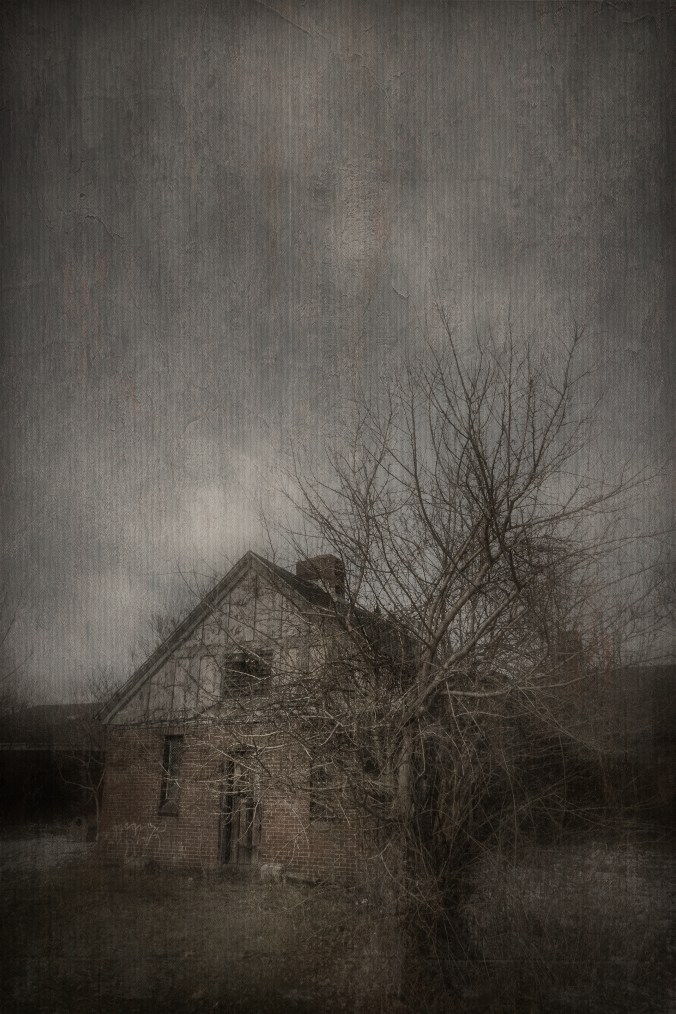
Winter has been a favorite season of mine for a long long time. The things I always liked about winter were the cold, ice, snow and wind…. But winters have been milder (thanks to climate change) so I find them less enjoyable than previously. Looks like we’ll have a “green” Christmas – for at least the fifth year in a row…… I remember when Christmas’s were always “white” with snow. Oh well, that’s life. Last week we had some snow so I was able to get out and enjoy it for the couple of days it lasted. Today’s image is proof of that.
When winter comes
Its cold dark embrace beguiling
We search for warmth
Wind howls coldly
Wrapped in sweaters of warmth
Hide in hovels
Winters Solstice
Boldly we soldier on
Bring On The Night
Light only flickers
Dancing a tarantella
A dark long night-scape
In the northern hemisphere Christmas is also closely aligned with the Winter Solstice – the darkest time of the year when days are short and nights are long (unlike my friends in the southern hemisphere where this is the beginning of summer).
In honor of the Winter Solstice here is some music by the underrated Tin Hat Trio. The track is titled THE LONGEST NIGHT from their recording Book Of Silk.
I’ve been fascinated with concepts of time and our perceptions of it. I just saw this wonderful film that is an artful exploration of the subject of time.
It is titled THE END OF TIME by Peter Mettler…. It is mostly image and music but there is some spoken word. And wow, the spoken word has so many quotable quotes I would just say watch the whole movie. Here is a trailer to entice you.
Did you know that the root word for time and weather is the same in many languages? With that in mind here are eight questions and possible answers arranged in an hourglass shape.
Q: Are you rushing because you are Late?
A: I am getting wet.
Q: Do you like the hot afternoon sun?
A: It is 3PM.
Q: Are you really 85 years old?
A: The sun is setting.
Q: What time is it?
A: It is snowing.
Q: What time is dinner?
A: The wind is blowing.
Q: Where is the sun rising?
A: The dawn comes early.
Q: When does the moon rise?
A: The temperature is dropping.
Q: Do you have the time?
A: Can’t you see the clouds in the sky?
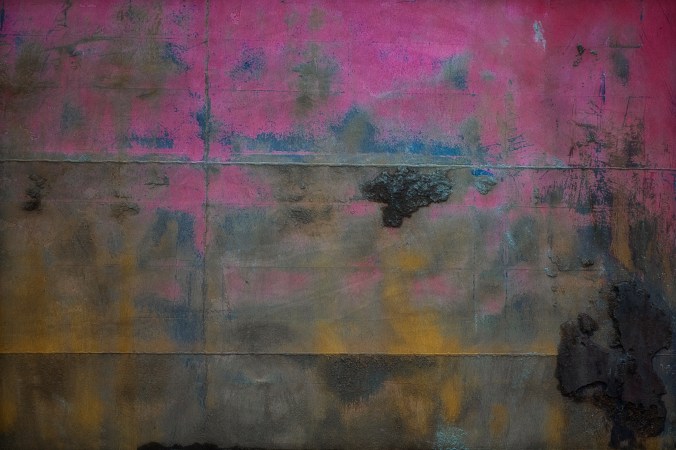
Hello again everyone. As many of you know I have a preoccupation with the subject of rust in my photos. More than a few of my photos feature rust in some form. Today is no different. I’ve been thinking about why I find rust to be such a dynamic subject. Part of it is (as I’ve written on my previous blog) the Wabi-Sabi aesthetic; Finding beauty in the imperfect, the flawed and discarded. But it also goes beyond that. I think rust has many lessons to teach us. No only about the inevitable end of all things but also how we can come to terms with the inevitable end. Rust is strong. It’s strength does not lie in speed, or the forceful blow to its subject. Rust is gentle. It does not seek to hide – it is visible in its destruction. Rust takes it’s time; the object of its affection is coaxed into its corrosive embrace.
You and me like all things must end. It is the nature of things. We are mortal. That means we will not live forever no matter how hard we try to extend the time we have. I don’t care how fit you are, how free of disease you have been, your physical fitness, or your emotional health. You will die. In fact, you might say you are already dying. And that’s okay. There is beauty in the process. What? Yes, there is beauty in the process of dying = it’s all in how you look at it. You can approach it with grace and appreciation for the time you have and the inevitable end or you can fight it every single step of the way. I once heard a woman say, “I do not plan to grow old gracefully, I plan to fight it every step of the way”. I’ve always found that viewpoint rather tragic. But that is the prevailing viewpoint in western society. In fact the exception in western culture is that you must fight it and with medical and technological advances you can fight aging, disease etc. But that is all a delusion. In the west we have become masters of delusion and self-deception.
Why do we find Autumn to be one of the most beautiful times of the year? Autumn is the season of dying. The leaves on trees are the most colorful just before they die and fall to the ground. And this change seems to happen rather fast but the change actually started at the point the leaf first came out and reached maturity on its branch back in the Spring. Our lives are the same way. It’s not just the newborn and young that are beautiful. Beauty is enhanced through experiences that are both good and bad. Rust is like that; it is one of those experiences that may seem to hasten the demise of something but it does not know that. It just is. It is a part of nature. A part of life experience just like disease, physical and emotional discomfort. Those things exist to add to our beauty.
You find me
Slowly you Change my life
I love you
**************
I feel your presence
your corrosion adds beauty
glory of Autumn
**************
Your rough embrace
Enhances my life through change
I welcome you
**************
The color of love
Textures the smooth beauty of life
Open arms tremble
**************
Sing a song of rust
A slow ballad of decay
Autumns dying love
***************
Sound of slow scraping
Crippled dry dusty fingers
Wabi-Sabi world
****************
Illusions of age
You teach strength through weakness
Beauty in Frailty
Your music moment provided by a band I recently discovered and had to buy all their albums – Do Make Say Think – A TENDER HISTORY IN RUST from their album You, You’re A History In Rust.
Album version
Alternate version
****Hey! if you have short form poem or haiku about rust and the ideas I’ve written about, please feel free to post in your comment. 😉
The early morning had an autumnal chill in the air and was overcast like so many clouded minds waking to the new day.
I was at the laundromat; not one of my favorite things. I go early, making every attempt to avoid the greedy rush of individuals jockeying for machines.
This morning eight other people had the same idea.
I had a book by Peter Handke that I was reading – ON A DARK NIGHT I LEFT MY SILENT HOUSE. It’s a short novel with prose that reads like poetry. It travels the razors edge of reality and dreams, so-much-so that, at times, I wasn’t sure if I was reading a really great story or if I was dreaming of reading. As I slipped farther and farther into the world of the story the sounds of the laundromat seemed more distant, muffled, even murky.
My quiet reading repose was interrupted by the RAT-A-TAT-TAT of machine gun fire – the sound of death – blasting from the mobile device of a seventy-year-old gray-haired grandmother playing an obviously violent video game and sitting near, too near me, lost in her own oblivion.
Annoyed by the cruel aural assault I just closed my eyes and let the sounds of the laundromat merge into a cacophonous free-jazz experiment; Albert King was playing on the overhead sound system swinging with updates about Hurricane Matthew, on the television, merging with the friendly chatter of others who seem to enjoy laundry – and company. Suddenly, a searing break of five washing machines whirring and buzzing, in their wild interlude, on the spin cycle in complete synchrony eventually to subside and merge with the rest of the sounds in this social sound-fest ending with the click click click click click of the same five machines stopping, signaling the cycle was over.
After drinking in all the sounds it was time to dry out, fluff and fold. The feeling of warm, fresh softness carried out to the car. Another week has ended. Now ready to start a new week, clean and clear. Ready to carry-on after this unpleasant sensorial massage. Ultimately satisfied. Paradox of mundanity.
I was so deeply grieved a few days ago to hear of the loss of one of the greatest modern thinkers and literary figures, Umberto Eco. I am at a loss for words to describe the impact he has had on my life and my way of thinking and seeing. He was Professor of Semiotics at Milan University, social critic and satirist, essayist and story teller. As a founder of the study of Semiotics (the study of signs, symbols; they’re processes and they’re meaningful communication) he opened up a whole vista of study that would parallel and have the same type of impact as Joseph Campbell’s work on Mythology. It has shaped how I perceive life around me, and various “entertainments” such as films, music, art, sports, various media and other meaningful diversions. I am grateful for the translators who translated his work from the Italian to English.
I’m happy to have read all of his Fiction work that has been translated to English. I was first exposed to his work through a university theater history course on modern/contemporary theater and literature. Mandatory reading for this course was Eco’s book, Name of The Rose (at that time back in the early 80’s) he was not quite so well known in the US as he is now. I’m grateful for my history teacher to include this work in the required reading. Accompanying the main story was a “post script” on post modernism written by Eco. Between the story in the main book and his philosophical thoughts on post modernism I was hooked.
Since then I’d read all of his fictions and many of his non-fiction works. Favorites and recommendations include, NAME OF THE ROSE, FOUCAULT’S PENDULUM, THE MYSTERIOUS FLAME OF QUEEN LOANA. Also I love the children books he wrote that were illustrated by abstract artist Eugenio Carmi, THE BOMB AND THE GENERAL, THREE ASTRONAUTS, and THE GNOMES OF GNU. My favorite non-fiction works are: THE OPEN WORK, MISREADINGS, TRAVELS IN HYPER-REALITY, HOW TO TRAVEL WITH A SALMON, SIX WALKS IN THE FICTIONAL WOODS, BELIEF OR NON-BELIEF (A conversation between Eco and Cardinal Carlo Maria Martini), POSTSCRIPT TO THE NAME OF THE ROSE, KANT & THE PLATYPUS, HISTORY OF BEAUTY, TURNING BACK THE CLOCK:HOT WARS AND MEDIA POPULISM, ON UGLINESS, THE INFINITY OF LISTS, and finally, INVENTING THE ENEMY.
So as you see, yes, I’ve read a few of his works. 🙂 Here are 10 quotes:
What is love? There is nothing in the world, neither man nor Devil nor any thing, that I hold as suspect as love, for it penetrates the soul more than any other thing. Nothing exists that so fills and binds the heart as love does. Therefore, unless you have those weapons that subdue it, the soul plunges through love into an immense abyss. ― The Name of the Rose
I think a book should be judged 10 years later, after reading and re-reading it. I was always defined as too erudite and philosophical, too difficult. Then I wrote a novel that is not erudite at all, that is written in plain language, The Mysterious Flame of Queen Loana, and among my novels it is the one that has sold the least. So probably I am writing for masochists. It’s only publishers and some journalists who believe that people want simple things. People are tired of simple things. They want to be challenged. –interview with the Guardian in 2011
All the stories I would like to write persecute me when I am in my chamber, it seems as if they are all around me, the little devils, and while one tugs at my ear, another tweaks my nose, and each says to me, ‘Sir, write me, I am beautiful’.
On the morning of July 27, 1943, I was told that, according to radio reports, fascism had collapsed and Mussolini was under arrest. When my mother sent me out to buy the newspaper, I saw that the papers at the nearest newsstand had different titles. Moreover, after seeing the headlines, I realized that each newspaper said different things. I bought one of them, blindly, and read a message on the first page signed by five or six political parties – among them the Democrazia Cristiana, the Communist Party, the Socialist Party, the Partito d’Azione, and the Liberal Party. Until then, I had believed that there was a single party in every country and that in Italy it was the Partito Nazionale Fascista. Now I was discovering that in my country several parties could exist at the same time. – from his 1995 essay UR-Facism, from the New York Review of Books
Books are not made to be believed, but to be subjected to inquiry. When we consider a book, we mustn’t ask ourselves what it says but what it means. – The Name of the Rose
I should be at peace. I have understood. Don’t some say that peace comes when you understand? I have understood. I should be at peace. Who said that peace derives from the contemplation of order, order understood, enjoyed, realized without residuum, in joy and truimph, the end of effort? All is clear, limpid; the eye rests on the whole and on the parts and sees how the parts have conspired to make the whole; it perceives the center where the lymph flows, the breath, the root of the whys… ― Foucault’s Pendulum
The real hero is always a hero by mistake; he dreams of being an honest coward like everybody else.
The [Da Vinci Code] author Dan Brown, is a character from Foucault’s Pendulum! I invented him. He shares my characters’ fascinations—the world conspiracy of Rosicrucians, Masons, and Jesuits. The role of the Knights Templar. The hermetic secret. The principle that everything is connected. I suspect Dan Brown might not even exist. – interview with the Paris Review in 2008
Charlie Brown has been called the most sensitive child ever to appear in a comic strip, a figure capable of Shakespearean shifts of mood; and Schulz’s pencil succeeds in rendering these variations with an economy of means that has something miraculous about it. The text, always almost courtly (these children rarely lapse into slang or commit anacoluthon), is enhanced by drawings able to portray, in each character, the subtlest psychological nuance. Thus the daily tragedy of Charlie Brown is drawn, in our eyes, with exemplary incisiveness. – Eco on the comicstrip Peanuts, for the New York Review of Books in 1985
How does a person feel when looking at the sky? He thinks that he doesn’t have enough tongues to describe what he sees. Nevertheless, people have never stopping describing the sky, simply listing what they see… We have a limit, a very discouraging, humiliating limit: death. That’s why we like all the things that we assume have no limits and, therefore, no end. It’s a way of escaping thoughts about death. We like lists because we don’t want to die. – interview with Der Spiegel in 2009
Rest in Peace: Umberto Eco January 5, 1932 – February 19, 2016
I love morning best
the blanket of stillness
and pillows of quiet
cushion the new day
as it emerges snail-like
from the shell of night & sleep
080515
today I am without words
without pen
that double-edged sword
which carves out of the imagination
shapes on paper
proof of one’s existence
080615
in memoria of Barb H. (friend and co-worker)
SUDDEN DEATH
two words full of weight and anxiety
like a sinking stone
that gives no right for the sun to shine
sunshine and sadness
the eternal conflict
minuano(*) wind
comes to rest in an instant
forever peace
quiet night
living only in dreams
and happy memories
*(from wikipedia)The Minuano is a cold wind that blows in the South of Brazil and in Uruguay. It is widely mentioned in the Gaúcho folklore of the region. This wind originates from cold polar fronts that come from the Southwest of South America during periods of high atmospheric pressure, usually following rains caused by the shock of the cold front with warmer stationary humid air. Some times it produces a “howling” sound.








 ... on being and becoming ...