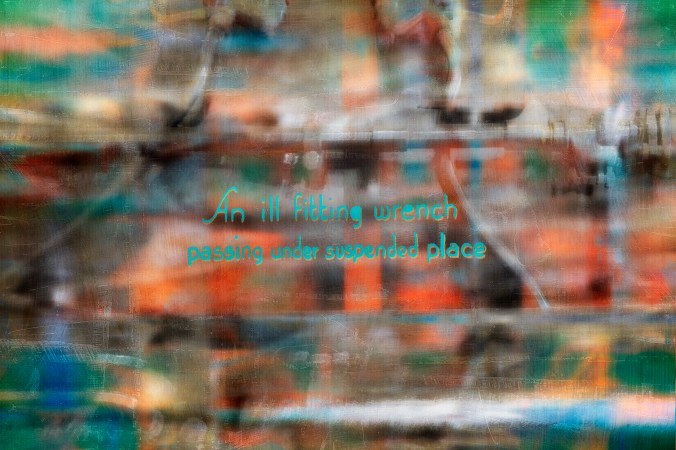
Ill Fitting Wrench


58 years ago at this time I was in the second trimester before my birth.
In only a few months I will come into being for the 58th time.
So much has happened since I was first conceived.
I continue to change and evolve –
Into a being who is genetically predestined by choice.
I am the paradox.
I am the quandary.
I am the essence of joy and sadness –
Working out my own salvation with care and understanding.
My own manifest destiny.
I don’t know if I’m the only one to notice this…. Have you ever noticed that it’s no longer how we play the game that matters; it’s all about winning and losing? It’s no longer about the journey but about the end? From the highest echelons of political office down the the humblest individual people all want to be winners – they want to think of themselves and winners and have others think of them as winners. Winning has become everything. And losing has become an issue of placing blame, making excuses, and/or justifying the loss. Reacting angrily with cries of “NOT FAIR” when one loses and complaining about the loss does not reflect well on those who lose. I think this is a major warning sign for the future of humanity. I started thinking about this recently after a competition we had in our workplace. The team I was most closely affiliated with lost. They had such a difficult time with losing that they complained about it all day and following day. I had found it so ridiculous that they should react so badly. But, like I said, it got me thinking.

I think there may be several reasons for this lack of sportsmanship/gamesmanship behavior. The first is analysis or maybe more precisely over-analysis. Everyones got an opinion and they tear apart and nit-pick to the finest detail their own performance as well the performance of others. It is a “gaze” that lasts too long and is too rigidly detailed to ultimately be of any beneficial use; except, to justify and tear down. Now you may say, “what’s wrong with analyzing a situation to become better in the future?” Fair question. What IS wrong (I would argue) is that it does not necessarily make one better unless it makes them a better complainer, whiner when they lose in the future.
Another reason – and we will only see this get worse – starting with our children we teach them that everyone is a winner in events that just by participating you are a winner and so every single participant is given a ribbon or a trophy whatever the prize may be. This is completely unrealistic and we are setting up our children with unrealistic expectation when they grow up and enter the adult world. This is probably one of the greatest tragedies be we are, setting up our children for a lifetime of hurt, dissatisfaction, complaint, lack of acceptance and understanding of one’s position and ultimately this can lead to violence. And who’s fault is it? The children’s? Absolutely not – it’s the fault of the adults to taught them.
I also think that a very likely reason is the switch of emphasis from individual performance to team performance which has only increased with the rise of professional sports. Everyone has “teams” now – even businesses, social organizations, political parties – it seems like absolutely everything is subdivided by the concept of team. And this has completely changed the value of individual performance. Individuals are not fully accepted, “you must be part of a team”, “you must support your team” I personally think this is damaging and ultimately de-values the individual and encourages group-think and sycophantic behavior. Failure to value individual uniqueness and seeing how an individual fits in the bigger picture will lead to the downfall and failure of many groups.
Technology. Okay I can see some of you rolling your eyes thinking, “he’s gonna start bashing technology”. Actually have no intent of doing that. Technology is a wonderful tool that we can use to learn, grow and expand our knowledge, understanding and acceptance of not only ourselves, but also of others. Now, like many things humans have created, technology is a double-edged sword. And information technology has the sharpest edge on that sword. Media and internet make EVERYTHING more immediate (well, more-or-less until the recent battles over net neutrality). As a species that has created these tools we are in our infancy in understanding both the benefits and pitfalls of such tools. And there are pitfalls. I would argue that one pitfall is that with such immediacy of all manner of information we have become less discerning in our consumption and digestion of information. Because there is alway “this…”, then “this… again”, “this…. recycled”, “This…. regurgitated”, “this… analyzed yet again” We are in a psychotic state of always reacting to the next thing and not stopping to digest what was first consumed. One reason I think we do this is that with this omnipresence of new and incessantly recycled information creates the illusion that it is ALL important. And quite frankly, it is NOT that important. In fact I suspect probably 90 percent of all information in the media and on the internet is pointless and without value – much like our excess consumption of sugar in our diet. We don’t need al the sugar that we eat but it sure tastes good and therefore we train our bodies to think that it is important. The media and internet is the same way. It is an addiction. In fact manufacturers are continually looking for new technologies to “connect” us to the so-called information super-highway. But I suspect that at some point what will happen is that just like too much sugar causes our bodies to shut down – too much information will result in a intellectual shut-down. All of this information with it’s immediacy and fraudulent self-importance further exacerbates the differences between winning and losing.
I also think we need to look at religion and how it has become an unwitting disciple to the secular concepts of winning and losing. Many religions view their followers as “the chosen one” with some notion of reward for being part of that group and yes I have seen many that reward people for following while condemning those who have a different way to go. I once volunteered at a homeless shelter for nearly 4 years. Over the course of that time I saw clients rewarded and given favoritism and opportunities just because they learned to talk the talk – but look out because one slip and they were gone. I used to laugh at the news letter for the homeless shelter which was used for soliciting funding and support – because their feature story was for someone that was actually kicked out of the shelter because of a mistake they made. This would happen on a regular basis. There was talk of unconditional grace and forgiveness at the shelter but I hardly ever saw it. Yet it goes on because it has become a community institution. It’s existence has become more important than its mission which is sadly what can be said of most religions and religious organizations. These institutions reward the “winners” and disavow the “losers”.
Celebrity is the final thing that I think causes us to understand the value of losing. In our media and “image” driven culture Celebrities are adored and worshiped. Throughout the history of humanity Celebrity has existed. But with the rise of media celebrity became more entertainment driven. And not only the building up of celebrity but also the tearing down of celebrity. This is a cultural disease that MUST be treated. How does celebrity contribute to the malaise of winning and losing? Celebrities are revered, even worshiped. They are people that others look up to. And because of that, even though they try to deny it – they are de-facto role models for society at large. So many people see celebrities as the only ones who’s voices matter. Many people strive toward celebrity because celebrities are “winners” – But this is part of the great lie. And media technology and the internet displays every single moment of a celebrities life – and for those who follow any given celebrity they “see” what is and isn’t acceptable they judge their own lives by what that celebrity says and does. And when a celebrity falls out of favor people simply move on the the next celebrity – because there’s always one just waiting to take your attention and adoration. It’s all part of “winning.”
Is there any good news? Can we bring the “game of life” back into balance where winning and losing is less of a criticism and more of an evaluation of where things stand? Yes. I’m happy to say there is good news but it will require self-discipline our each of our parts to self-regulate our consumption of media and information. It will require that we look outside of our own beliefs and ideas, seeking to understand and accept differing viewpoints. It will require we be patient with ourselves but mostly with others; because in our current self-centered cultural milieu it will be difficult to see others progressing as fast as ourselves – so we must be patient with them. We must learn to lose and as we learn to do that and accept loss then we will be able to help others in the process.
We need to understand and accept the following facts; yes, we need to do our best but there will always be someone better. Someone will always interpret the rules differently than you. The rules are always changing. The winning moment if over so quickly – it’s only a temporary high. There are ALWAYS more losers than winners. You will lose more than you will win. Acceptance is not defeat. Learning to lose is a great gift. Losing is something that should be taught with grace, understanding and compassion. It’s okay to lose – that’s life. To be a good loser – that’s grace.
I’ve recently been watching old Olympic films. One thing that struck me is the Oath that is taken. To be more precise. the Oath when it was first taken in the 1920 Olympics. “Chivalry”, “Honour” and “the glory of sport”. These apply to everyone. These qualities are the great equalizer between winning and losing. It is about individual values and the value of the individual (whether they play on a team or not).
We swear. We will take part in the Olympic Games in a spirit of chivalry, for the honour of our country and for the glory of sport.
Final consideration: when you win – you’ve got no place to go. When you lose you always have someplace you can go.
Well, this has been one of my wordier posts so if you’ve made it this far – I am grateful and eager to hear your opinions and views on these ideas.

I’ve been fascinated with concepts of time and our perceptions of it. I just saw this wonderful film that is an artful exploration of the subject of time.
It is titled THE END OF TIME by Peter Mettler…. It is mostly image and music but there is some spoken word. And wow, the spoken word has so many quotable quotes I would just say watch the whole movie. Here is a trailer to entice you.
Did you know that the root word for time and weather is the same in many languages? With that in mind here are eight questions and possible answers arranged in an hourglass shape.
Q: Are you rushing because you are Late?
A: I am getting wet.
Q: Do you like the hot afternoon sun?
A: It is 3PM.
Q: Are you really 85 years old?
A: The sun is setting.
Q: What time is it?
A: It is snowing.
Q: What time is dinner?
A: The wind is blowing.
Q: Where is the sun rising?
A: The dawn comes early.
Q: When does the moon rise?
A: The temperature is dropping.
Q: Do you have the time?
A: Can’t you see the clouds in the sky?
Hello again everyone. As many of you know I have a preoccupation with the subject of rust in my photos. More than a few of my photos feature rust in some form. Today is no different. I’ve been thinking about why I find rust to be such a dynamic subject. Part of it is (as I’ve written on my previous blog) the Wabi-Sabi aesthetic; Finding beauty in the imperfect, the flawed and discarded. But it also goes beyond that. I think rust has many lessons to teach us. No only about the inevitable end of all things but also how we can come to terms with the inevitable end. Rust is strong. It’s strength does not lie in speed, or the forceful blow to its subject. Rust is gentle. It does not seek to hide – it is visible in its destruction. Rust takes it’s time; the object of its affection is coaxed into its corrosive embrace.

You and me like all things must end. It is the nature of things. We are mortal. That means we will not live forever no matter how hard we try to extend the time we have. I don’t care how fit you are, how free of disease you have been, your physical fitness, or your emotional health. You will die. In fact, you might say you are already dying. And that’s okay. There is beauty in the process. What? Yes, there is beauty in the process of dying = it’s all in how you look at it. You can approach it with grace and appreciation for the time you have and the inevitable end or you can fight it every single step of the way. I once heard a woman say, “I do not plan to grow old gracefully, I plan to fight it every step of the way”. I’ve always found that viewpoint rather tragic. But that is the prevailing viewpoint in western society. In fact the exception in western culture is that you must fight it and with medical and technological advances you can fight aging, disease etc. But that is all a delusion. In the west we have become masters of delusion and self-deception.
Why do we find Autumn to be one of the most beautiful times of the year? Autumn is the season of dying. The leaves on trees are the most colorful just before they die and fall to the ground. And this change seems to happen rather fast but the change actually started at the point the leaf first came out and reached maturity on its branch back in the Spring. Our lives are the same way. It’s not just the newborn and young that are beautiful. Beauty is enhanced through experiences that are both good and bad. Rust is like that; it is one of those experiences that may seem to hasten the demise of something but it does not know that. It just is. It is a part of nature. A part of life experience just like disease, physical and emotional discomfort. Those things exist to add to our beauty.

You find me
Slowly you Change my life
I love you
**************
I feel your presence
your corrosion adds beauty
glory of Autumn
**************
Your rough embrace
Enhances my life through change
I welcome you
**************
The color of love
Textures the smooth beauty of life
Open arms tremble
**************
Sing a song of rust
A slow ballad of decay
Autumns dying love
***************
Sound of slow scraping
Crippled dry dusty fingers
Wabi-Sabi world
****************
Illusions of age
You teach strength through weakness
Beauty in Frailty
Your music moment provided by a band I recently discovered and had to buy all their albums – Do Make Say Think – A TENDER HISTORY IN RUST from their album You, You’re A History In Rust.
Album version
****Hey! if you have short form poem or haiku about rust and the ideas I’ve written about, please feel free to post in your comment. 😉
***I found the subject for this photo near my home and felt it legitimately illustrated how I feel about what is happening here in the US.
In Trumpmerica – the left is not tolerated. The legitimate press is not tolerated. There is only one way – the right – Trumps way.

It’s funny how someone’s desire to “Make America Great Again” has actually made it worse. Muzzle the press. Authoritarian rule. Punish the opposition. Meanness. Lack of noble character traits. Ignorance. Re-writing history.
Q: What happened to my country of birth?
A: SHE’S GONE AWAY (Nine Inch Nails – as performed in TWIN PEAKS: The Ltd Series)
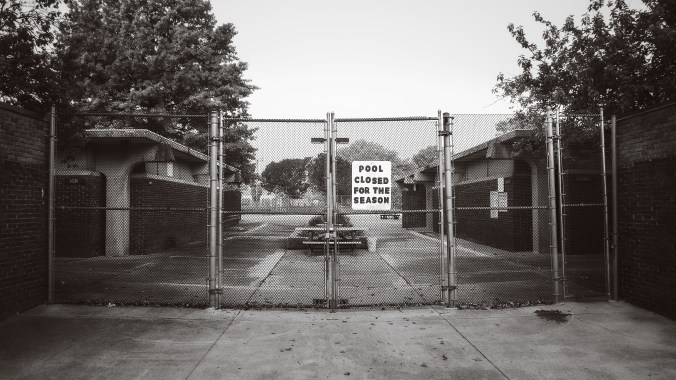
Leaves are Falling
Swimsuits exchanged for flannels
Signs of Autumn
I’ve been a fan of composer, musician Jia Peng Fang (Chinese: 賈鵬芳)
for years. He’s from China and plays a traditional folk instrument called the Erhu (Chinese: 二胡). I find the mournful sound soothing as the Summer drifts quietly and slowly into the sunset and Autumn rises in the cool crisp morning. May this new season bring many blessings to all who read this.
***fyi – Artist website is very interesting with great pictures, videos etc – but only language options are Chinese or Japanese – however, you don’t need to understand the spoke/written language to understand the language of beautiful music – so check it out.
THE PARADOX OF URBAN LOGIC

For the second review in this (hopefully) ongoing series. I’d like to draw your attention to a relatively new recording by Icelandic composer, Jóhann Jóhannsson, titled Orphée. Jóhannsson has composed for numerous films including the recent ARRIVAL and upcoming BLADE RUNNER 2024 as well as many solo studio recordings….. But of all his work so far the one that really stands out as a pinnacle in his oeuvre is this “solo” recording exploring the myth of Orphée/Orpheus.
The second track on the album:
This recording for Deutsche Grammophon records can, at first listen, be compared to Samuel Barber’s ADAGIO – but that is only in mood and temperament. When listening to this masterwork by Jóhannsson I find so many rich and wonderful feelings and ideas. I can feel like I’m wandering through a darkened hallway, arms outstretched, moving slow and gently feeling my way around the space. With continued listening I also feel a sense of gravity a tension that a very large bird may feel as it starts out in flight and slowly lifts itself from the earth. And in its flight feels the constant pull of the earth again even in it’s supposed freedom of soaring on the winds. Maybe it’s the speed at which the musical themes evolve throughout this 47 minute composition.
When thinking about this music, and the ideas, of Orpheus in the underworld wanting to bring back his love. I also begin to muse on the “warning” he is given to not look back and trust that his love Eurydice is behind him. And when he does look back – she is lost to him forever. This notion of not looking back is also found in the Bible story (Genesis 19) of Lot and his family as they flee Sodom and Gomorrah who were also warned to not look back. When Lot’s wife looks back she is turned into a pillar of salt. I further begin to wonder, what is this problem with looking back? It seems to be something we as humans do all the time. It is the cornerstone of memory. We don’t have memories of the future, do we? Or maybe we just haven’t learned to access those future memories. And looking back isn’t really all that bad. In the case of Orpheus the underworld can be compared to underground that where things are rooted – for plants literally. Underground is the foundation upon which we build our buildings and other man-made structures. It is not only a place for the dead. It seems that one could make the argument that Orpheus was looking back to his roots and very foundation for his wife – the gods had tricked him. In the case of lot with his wife turning to a pillar of salt. Salt is beneficial and necessary in all our diets it is also a preservative. So maybe her looking back actually made it possible for the rest of her family to be saved/preserved. These two examples may relate to the sense of gravity that I hear and feel in this music under the earth there is no escape from gravity and a pillar of rock/salt is so completely connected to the rest of the rock it cannot escape.
We all look back at some point in our lives. It is not a weakness. It is only human nature and inevitable. Orpheus, like Lot’s wife HAD to look back. And that may be the tension I hear and feel in the music – the desire to only look forward while feeling the pull to look back that is ultimately irresistible. So maybe the problem isn’t the looking back; as the warnings imply (and many bible scholars will try to teach), maybe these myths simply teach us of the cost. There is a cost and consequence to everything. It’s not a matter of good or bad but simply an understanding of exchange. And that thought is freeing and non-condemning like a bird in flight.
The final and only genuinely vocal track on the album:
These are the many things that drifted through my listening of this excellent album. All that being said, this music simply stops me in my tracks and forces me to listen, think, dream. I hope you enjoy it as much as I do.
TRACK LIST
1. Flight From The City
2. A Song For Europa
3. The Drowned World
4. A Deal With Chaos
5. A Pile Of Dust
6. A Sparrow Alighted Upon Our Shoulder
7. Fragment I
8. By The Roes, And By The Hinds Of The Field
9. The Radiant City
10. Fragment II
11. The Burning Mountain
12. De Luce Et Umbra
13. Good Morning, Midnight
14. Good Night, Day
15. Orphic Hymn
Follow the link for more info:

“We shouldn’t teach people to stop using certain words. We should teach them to stop being affected by them.”
~ Daniel Ganama


The early morning had an autumnal chill in the air and was overcast like so many clouded minds waking to the new day.
I was at the laundromat; not one of my favorite things. I go early, making every attempt to avoid the greedy rush of individuals jockeying for machines.
This morning eight other people had the same idea.
I had a book by Peter Handke that I was reading – ON A DARK NIGHT I LEFT MY SILENT HOUSE. It’s a short novel with prose that reads like poetry. It travels the razors edge of reality and dreams, so-much-so that, at times, I wasn’t sure if I was reading a really great story or if I was dreaming of reading. As I slipped farther and farther into the world of the story the sounds of the laundromat seemed more distant, muffled, even murky.
My quiet reading repose was interrupted by the RAT-A-TAT-TAT of machine gun fire – the sound of death – blasting from the mobile device of a seventy-year-old gray-haired grandmother playing an obviously violent video game and sitting near, too near me, lost in her own oblivion.
Annoyed by the cruel aural assault I just closed my eyes and let the sounds of the laundromat merge into a cacophonous free-jazz experiment; Albert King was playing on the overhead sound system swinging with updates about Hurricane Matthew, on the television, merging with the friendly chatter of others who seem to enjoy laundry – and company. Suddenly, a searing break of five washing machines whirring and buzzing, in their wild interlude, on the spin cycle in complete synchrony eventually to subside and merge with the rest of the sounds in this social sound-fest ending with the click click click click click of the same five machines stopping, signaling the cycle was over.
After drinking in all the sounds it was time to dry out, fluff and fold. The feeling of warm, fresh softness carried out to the car. Another week has ended. Now ready to start a new week, clean and clear. Ready to carry-on after this unpleasant sensorial massage. Ultimately satisfied. Paradox of mundanity.

Nature can teach us so many things if we only take the time to stop and listen. This photo was taken at a local area called Gorge Metro Park. And yes it does live up to its name since it is a large rocky gorge carved out by the Cuyahoga River over centuries and cuts right through the city of Cuyahoga Falls. There are several trails in this park where one can observe huge rock overhangs, cliff walls and large monstrous boulders. This image is a detail from a cliff wall. It was well above arms reach and I had my zoom lens out to its max of 200MM. I was mesmerized by this patch of grass that seemed to be growing happily on a small outcropping of the cliff wall. I took this photo a few weeks ago and have been pondering over it ever since.
As a species, we humans are a restless lot. We never seem to be satisfied with where we are at – neither in physical location personal, emotional or intellectual development. It seems are constantly dissatisfied with what life hands us. Now some people would praise that and say, “Duh! That’s how progress is made” But is so much dissatisfaction really beneficial? I think there’s a difference between the dissatisfaction that encourages progress and the dissatisfaction with life’s circumstances that are imposed on us that we have no control over. Can we ever accept contentment and happiness – even if they are fleeting?
I wonder if we need to take the time to truly cherish where we are located in life. I wonder if we can grow where we are planted like the grass in the photo. Talk about an inhospitable environment! That poor grass is in a bad location all around – lack of nutrients, lack of water, limited light and limited attention. But it is still growing. Is its life circumstance sad, tragic or unacceptable? Absolutely not. For it has shown me beauty and taught me something valuable. That patch of grass can be content with its limited life span because it has served some purpose for the betterment of the planet – even when it has reached maturity and “gone to seed” it will feed other animals and as it decays on it’s little rocky outcropping it will become fertile soil for the next generation. You and I are the exact same way. We may live an ever so humble existence – we may lack one thing or another – we may be living in circumstances that have spiraled beyond our control. And like the grass – we have worth – we have value – we exist for the betterment of the planet; it may have happened in the earlier part of our lives, in the present or may even happen in a fleeting moment in the future but we have worth. It’s not the amount of time we have or how much we do with it. The fact that we ARE is enough.
In our birth we bring joy and wonder. As we grow we become a symbol and a beacon. When we die we make room for others.
So go ahead try to appreciate where you are no matter how rocky it may seem. Just stop for a while and then slowly feel your way around lest you fall off the cliff. Then relax and grow where you are planted.
“Yet I tell you that not even Solomon in all his splendor was dressed like one of these. If that is how God clothes the grass of the field, which is here today and tomorrow is thrown into the fire, will he not much more clothe you—you of little faith?” – Matthew 6:29,30 (NIV translation)
“If the problem has a solution, worrying is pointless, in the end the problem will be solved. If the problem has no solution, there is no reason to worry, because it can’t be solved.” – Zen saying
“Before enlightenment, chop wood, carry water. After enlightenment, chop wood, carry water.” – Zen saying
“the quieter you become, the more you are able to hear.” – Zen saying
“Sitting quietly, doing nothing, spring comes, and grass grows by itself.” – Zen saying
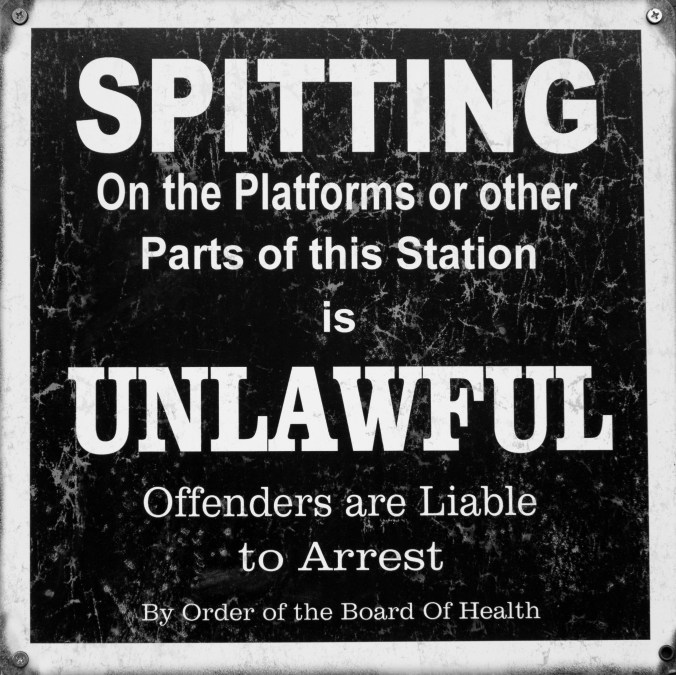
I once saw a sign and my first thought was, “Hmmmmph, that’s the story of my life!”…..
In the past few months I’ve noticed that has been my reaction to more and more signs. These signs just seem to be coming into focus of my awareness in a way they haven’t before. In fact there almost seems to be an oppression by signs. Some are just general informational signs. Things that announce operating hours, directions to a place, time it takes to get somewhere, who to call (and it ain’t Ghostbuster’s), and other general announcements. But I’m finding, and maybe it’s just my growing awareness, that more and more signs are dictating things. Signs that tell us to do one thing or another, telling us what we can and can’t do. And there are signs that are used to threaten and control…..
That is the focus of this new photo project I’ve started. These signs make up the story of our lives and can tell us things about ourselves, our culture, our perceptions and misconceptions about the world in which we live. So while one may dismiss these images in this project as just pictures of signs. I am asking the view to go further. To go beyond the obvious. To ask questions and let these signs bring new understandings.
Here are eight of the 20 odd images I’ve collected so far (in no particular order). Enjoy.






I was so deeply grieved a few days ago to hear of the loss of one of the greatest modern thinkers and literary figures, Umberto Eco. I am at a loss for words to describe the impact he has had on my life and my way of thinking and seeing. He was Professor of Semiotics at Milan University, social critic and satirist, essayist and story teller. As a founder of the study of Semiotics (the study of signs, symbols; they’re processes and they’re meaningful communication) he opened up a whole vista of study that would parallel and have the same type of impact as Joseph Campbell’s work on Mythology. It has shaped how I perceive life around me, and various “entertainments” such as films, music, art, sports, various media and other meaningful diversions. I am grateful for the translators who translated his work from the Italian to English.
I’m happy to have read all of his Fiction work that has been translated to English. I was first exposed to his work through a university theater history course on modern/contemporary theater and literature. Mandatory reading for this course was Eco’s book, Name of The Rose (at that time back in the early 80’s) he was not quite so well known in the US as he is now. I’m grateful for my history teacher to include this work in the required reading. Accompanying the main story was a “post script” on post modernism written by Eco. Between the story in the main book and his philosophical thoughts on post modernism I was hooked.
Since then I’d read all of his fictions and many of his non-fiction works. Favorites and recommendations include, NAME OF THE ROSE, FOUCAULT’S PENDULUM, THE MYSTERIOUS FLAME OF QUEEN LOANA. Also I love the children books he wrote that were illustrated by abstract artist Eugenio Carmi, THE BOMB AND THE GENERAL, THREE ASTRONAUTS, and THE GNOMES OF GNU. My favorite non-fiction works are: THE OPEN WORK, MISREADINGS, TRAVELS IN HYPER-REALITY, HOW TO TRAVEL WITH A SALMON, SIX WALKS IN THE FICTIONAL WOODS, BELIEF OR NON-BELIEF (A conversation between Eco and Cardinal Carlo Maria Martini), POSTSCRIPT TO THE NAME OF THE ROSE, KANT & THE PLATYPUS, HISTORY OF BEAUTY, TURNING BACK THE CLOCK:HOT WARS AND MEDIA POPULISM, ON UGLINESS, THE INFINITY OF LISTS, and finally, INVENTING THE ENEMY.
So as you see, yes, I’ve read a few of his works. 🙂 Here are 10 quotes:
What is love? There is nothing in the world, neither man nor Devil nor any thing, that I hold as suspect as love, for it penetrates the soul more than any other thing. Nothing exists that so fills and binds the heart as love does. Therefore, unless you have those weapons that subdue it, the soul plunges through love into an immense abyss. ― The Name of the Rose
I think a book should be judged 10 years later, after reading and re-reading it. I was always defined as too erudite and philosophical, too difficult. Then I wrote a novel that is not erudite at all, that is written in plain language, The Mysterious Flame of Queen Loana, and among my novels it is the one that has sold the least. So probably I am writing for masochists. It’s only publishers and some journalists who believe that people want simple things. People are tired of simple things. They want to be challenged. – interview with the Guardian in 2011
All the stories I would like to write persecute me when I am in my chamber, it seems as if they are all around me, the little devils, and while one tugs at my ear, another tweaks my nose, and each says to me, ‘Sir, write me, I am beautiful’.
On the morning of July 27, 1943, I was told that, according to radio reports, fascism had collapsed and Mussolini was under arrest. When my mother sent me out to buy the newspaper, I saw that the papers at the nearest newsstand had different titles. Moreover, after seeing the headlines, I realized that each newspaper said different things. I bought one of them, blindly, and read a message on the first page signed by five or six political parties – among them the Democrazia Cristiana, the Communist Party, the Socialist Party, the Partito d’Azione, and the Liberal Party. Until then, I had believed that there was a single party in every country and that in Italy it was the Partito Nazionale Fascista. Now I was discovering that in my country several parties could exist at the same time. – from his 1995 essay UR-Facism, from the New York Review of Books
Books are not made to be believed, but to be subjected to inquiry. When we consider a book, we mustn’t ask ourselves what it says but what it means. – The Name of the Rose
I should be at peace. I have understood. Don’t some say that peace comes when you understand? I have understood. I should be at peace. Who said that peace derives from the contemplation of order, order understood, enjoyed, realized without residuum, in joy and truimph, the end of effort? All is clear, limpid; the eye rests on the whole and on the parts and sees how the parts have conspired to make the whole; it perceives the center where the lymph flows, the breath, the root of the whys… ― Foucault’s Pendulum
The real hero is always a hero by mistake; he dreams of being an honest coward like everybody else.
The [Da Vinci Code] author Dan Brown, is a character from Foucault’s Pendulum! I invented him. He shares my characters’ fascinations—the world conspiracy of Rosicrucians, Masons, and Jesuits. The role of the Knights Templar. The hermetic secret. The principle that everything is connected. I suspect Dan Brown might not even exist. – interview with the Paris Review in 2008
Charlie Brown has been called the most sensitive child ever to appear in a comic strip, a figure capable of Shakespearean shifts of mood; and Schulz’s pencil succeeds in rendering these variations with an economy of means that has something miraculous about it. The text, always almost courtly (these children rarely lapse into slang or commit anacoluthon), is enhanced by drawings able to portray, in each character, the subtlest psychological nuance. Thus the daily tragedy of Charlie Brown is drawn, in our eyes, with exemplary incisiveness. – Eco on the comicstrip Peanuts, for the New York Review of Books in 1985
How does a person feel when looking at the sky? He thinks that he doesn’t have enough tongues to describe what he sees. Nevertheless, people have never stopping describing the sky, simply listing what they see… We have a limit, a very discouraging, humiliating limit: death. That’s why we like all the things that we assume have no limits and, therefore, no end. It’s a way of escaping thoughts about death. We like lists because we don’t want to die. – interview with Der Spiegel in 2009
Rest in Peace: Umberto Eco January 5, 1932 – February 19, 2016


Exercise:
Note: Do not try to control others during this exercise (i.e. telling them to be quiet etc). It is only necessary to control yourself.
“Silence is a friend who never disappoints.” ~ Confucius
********
“I have begun to realize that you can listen to silence and learn from it. It has a quality and a dimension all its own. ~ Chaim Potok
************
“Never miss a good chance to shutup” ~ Will Rogers
***************
“When words become unclear, I shall focus with photographs. When images become inadequate, I shall be content with silence.” ~ Ansel Adams
*************
“He who does not understand your silence will probably not understand your words.” ~ Elbert Hubbard
************
“Silence is a source of great strength.” Lao Tzu
*********
“Silence is only frightening to people who are compulsively verbalizing.” ~ William S. Burroughs
May all of you enjoy a quiet and peaceful weekend. Peace.
I am not a poet
I am just
Just a man
A man who finds it difficult to live and express himself in the realm of the obvious.
I am not a poet
I am just
Just a man
A man who struggles
Struggles and wrestles to see words that are not pictures and read pictures that are not words.
————————–
::[][][][][][][][][][][][][][]::[][][][][][][][][][][][][][]::
————————–
eyes closed
inhale
exhale
exhaustion
inhale
exhale
feel the tension shift
thoughts
worry
inhale
exhale
feel the tension shift
pre-occupation
future past
inhale
exhale
feel the tension shift
inability
resignation
inhale
exhale
feel the tension shift
rise
fall
inhale
exhale
feel the tension shift
tightening
ache
inhale
exhale
feel the tension shift
holding
holding, holding
inhale
exhale
feel the tension shift
numbing
release
inhale
exhale
feel the tension shift
unclenching
gift of open palms
inhale
exhale
feel the tension shift – relax
laxing
re-laxing
inhale
exhale
emanations spread out in time and space
The continuing exploration of over exposure. This adventure began in my previous series “LUMINOUS IMPRESSIONS” [which can be seen here https://www.behance.net/gallery/24471909/Luminous-Impressions ] In some ways I think over exposure is a perfect metaphor for the internet era. When a photograph is over exposed it leads to “white out” situations where details become fuzzy and unrecognizeable. I wonder if that’s what will happen to us on the internet. Will too much exposure lead to a sort of personal and cultural blindness? And, is this a bad thing?
On the other hand – because of over exposure where things are not easily identified we are left to explore other realms of the over exposed image. It can give us new feelings and be an almost spiritual exploration into the non-pictorial and non-representational image. In other words, because we cannot readily identify something we are free to redefine it on our own mental, spiritual and emotional terms. Ten people can look at a photo of a kitten and all agree that it is a kitten they are viewing but when the image is over exposed each individual can come up with their own interpretation of what they are looking at.
Click “play on the video” then click on the first image and you will be able to see it large and then press arrow button to go to next image.




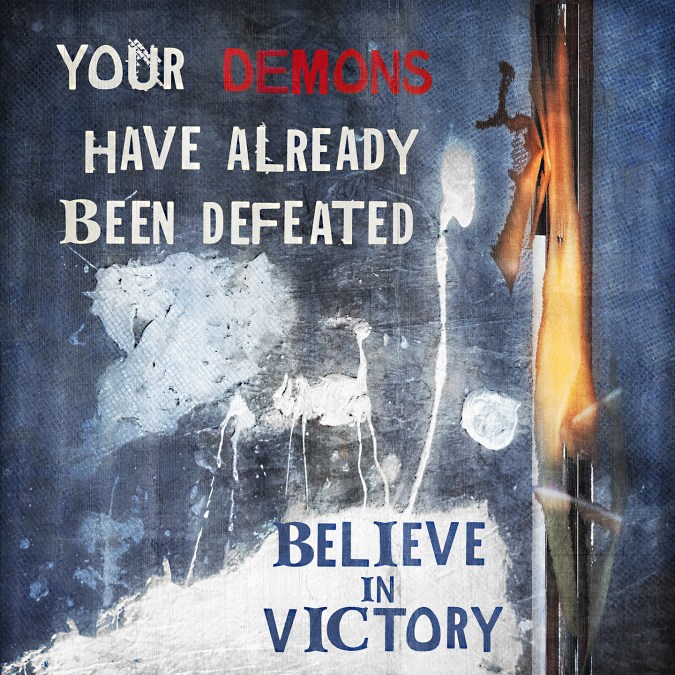
…of course… what did you expect?…It seems that whenever I start making lists…I can’t help but incorporating the items on the list into images. So far in this series I have about thirty items on the list (only twenty which I’ve posted on this blog). So it seemed natural to start creating backgrounds for these “sayings”.
“GREY IS THE COLOR OF OUR TIME”
~ JANNIS KOUNELLIS

Here is the cover of the new book. Click on the title below to be redirected for a preview on blurb.com.

(fyi- this is a re-post from my previous blog in August, 2012.)
Scene from THE CROW “Victims, aren’t we all….”
I’ve been thinking about the things that put me “around the bend” regarding the institutions of the church. First of all I don’t believe the Church was ever meant to be an institution. It was just a label given to groups of people who got together from time to time.
The scene above from the excellent film, THE CROW, is a modern parable. A parable on the consequences of viewing ourselves, our churches, our religion, our culture as victims. When we view ourselves as victims we will only know violence, hatred and revenge. I’ve often told people, I am not and never will be a victim. That does not mean that others won’t try to make me a victim or victimize me in some way. But I choose to never see myself as a victim. That’s doesn’t mean my life is any easier. In fact, because of my choices, my life is at times more difficult than what it may need to be (I’ve been told more than once to just “play the game”).
This does not seem to be the case for the Church/institutional Christianity. It seems that the “church” everywhere is embracing victimization. For further proof one only needs to look at the elaborate security systems churches have in an effort to protect their investment. And that may be part of the problem. The investment for the church has become something other than the people who make up the church. Fund raising is used to prop up the institution. The Church has entered the realm of monument building. And it will do everything it can to defend and prop up it’s monuments. In short Churches have become “Like whitewashed tombs, which look beautiful on the outside but on the inside are full of dead men’s bones and everything unclean.” (Matthew 23:27) Everywhere we turn the so-called Church is on the attack. Defending it’s turf, complaining about its circumstances, and seeking anti-christian (legal/political) means of resolving it’s conflicts has become habitual behavior. In this age when the media is filled with stories of hate-crimes against different religions it is easy fall into the trap of victimization.
Why is victimization a trap? As soon as someone sees themselves as a victim they have already decided to react by complaining about their situation, lashing out, placing blame, even attacking the perceived cause/source of victimization. It’s done in the name of defending themselves. This is a very unhealthy and unproductive mindset. Sadly this is especially true in America since 9/11. Gun sales have risen sharply since that time. Sadly many of these buyers claim to be Christian. I know of people who try their best to use different bible passages to justify taking up arms (always out of context for self-justification). I know of one Christian who recently bought a gun in the name of defending his family. He sees himself as a minister of the gospel. But I ask what precedent does this set for your children? What example does that give to others? How does this even coincide with Jesus’ teaching – which you claim to follow? In fear, we already see ourselves as victims. When we are afraid we make unhealthy choices not only for ourselves but also for those around us who we may claim to be protecting. We become slaves to that fear of victimization. The result is we victimize ourselves. Sadly this has permeated the so-called church. We have applied this mindset to our beliefs – in spite of the actual teachings of the Source of the faith.
When we claim that we, our church and/or our religion are victims we are in bondage. We are trapped by our thinking. We have stopped promoting a gospel of love and freedom. We create and defend a gospel of bondage. We have created our own chains. Is it any wonder that Christianity has such a bad name today? Is it any wonder that church institutional membership is declining? Who wants to be in bondage? Not me! Jesus came to set people free from the very things that the church is doing.
Where I grew up and where I live there’s a lot of talk about being a “slave to Christ”, “in bondage to Christ”. Now the church has taken some archaic language in the bible and twisted it to support its gospel of bondage. As is surrendering one’s rights to the church has something to do with being Christian. It doesn’t. First of all slavery should never be promoted. If a person chooses to enslave themselves that is their choice. When the Bible is talking about being a “slave to Christ” it is not talking literally but metaphorically. It is about aligning oneself to the teachings of Christ and making every effort to live them in daily life and not give up trying even though one fails. That’s different from giving in to institution demand and mindset to defend the faith – as if faith was something to defend. This has given rise to an increase in Christian Apologetics. Genuine faith cannot be defended – it can only be lived.
Now, I want to be clear – I’ve NEVER heard a church or Christian say, “We are victims”. But a person doesn’t need to say it in words. As I’ve suggested all along – it’s in our attitudes/mindsets and our actions. Look at the Christians (whether Orthodox, Evangelical, Protestant, Catholic, etc) who seek to punish those they perceive are criminals (criminals being; those that object to, criticize, ridicule, distort and slander a person’s faith or religion in word and/or action) And this they apply to the arts, politics, science, education, lifestyles and other religions/belief systems. What has happened is that the Church has come to see itself as separate from humanity and not a part of it. This separation has had dire consequences. It is “Us vs. Them”. The church does not promote unity, healing, love among humanity but is a source of division. It not only puts one on the defensive but it becomes justification to attack and is used as a reason to go out and proselytize others in an effort to “bring them into the fold.” Instead of Christianity’s institutional leaders directing the path taught by Christ, this thinking is supported and encouraged. It is even applied to the institutions themselves – thus the evolution of the Gospel of Bondage.
This is inappropriate and was NEVER supported by Jesus. And that’s part of the problem. Jesus is being taught as the Messiah, that Savior of Humanity that did a lot of cool things and told some cool stories. But by-and-large the Church has stopped investigating his teachings. People use other scriptures out of context to justify their actions, thoughts and lives without testing them against what Christ taught. But if it doesn’t align with what Christ taught it is anti-christian.
So how should we then live? If we are Christians we need to re-investigate Jesus actual teachings and seek every effort to apply them to our lives. Teachings like forgiveness, love, compassion, mercy, caring for ALL people (not just those of our own faith or those who agree with us). When we can do this for people who are against us we no longer see them as separate from but actually a part of the big picture – a part of God’s creation – a part of the human family. We need to understand what he taught about the kingdom of heaven and what it means for us today.
We each have our function and purpose on this earth. We are part of one existence. Part of the God-consciousness itself. Each of us may be a different part of the body (i.e. someone may be a hand, foot, eye etc) but we can’t survive without each other. In fact we need each other. But If we reject others for their beliefs, actions, etc we are actually rejecting a part of the body that we are a part of. When this happens we are slowly killing ourselves by self decapitation. Have you ever seen a decapitation that was a good thing? Decapitation is ALWAYS violent and ugly.
A personal story:
I work in the Customer Service industry. No, not retail, not something that glamorous. I actually work the phones for a utility company. That means that I have the opportunity to be verbally attacked and even threatened – and it does happen from time to time. When I started this job (nearly 5 years ago) I literally had no idea what this would be like. Naturally at first I was on the defensive and it seemed that almost every call was a personal attack. And it’s hard not to feel that way when you are being verbally attacked or having your life or family threatened. Add to that we have a changing work-place environment based on the changing economy that adds challenges to the relationships I have with co-workers and supervisors. This all adds up to one stressful day. I tend to be more emotional anyway so dealing with these things are very difficult at times because it is my nature to react emotionally first and intellectually second. I am getting better at taking a moment (a breath, a pause, a heartbeat) to step back from the situation. But my growth and change has not been easy. I don’t think it’s supposed to be easy. But I view it as necessary. I keep a phrase by my computer that I look at quite often to remind me. It is simply, “Like water off a ducks back, let it roll over me.” The next step was to, as I’ve been talking about, viewing these people I deal with not just as “callers” or “co-worker’s” or “management” but as part of the human body – my body. It is a real game changer to think in this way. I can say that the outcome of my calls has been significantly different from when I started with this company. I still have a long way to go but I at least feel that I am on the right path. But again, it all comes down to the fact that at some point I decided NOT to be a victim or victimize others by being defensive.
We need to diminish our conflicts and differences not escalate them. It’s a choice. The choices we make now not only affect our actions but the actions of others both now and in the future. If we choose to perceive ourselves, our churches, our religion as victims we are making a very dangerous choice with dire consequences, both short-term and long-term. So don’t ever call me a victim. I am not and never will be a victim no matter what happens to me in this life. And it feels so good to say that. 🙂
Scene from DANGEROUS MINDS – “Choice”
Music today by Canadian musician Bruce Cockburn – GOSPEL OF BONDAGE
From the album ‘Big Circumstance’ (1989).
GOSPEL OF BONDAGE by BRUCE COCKBURN
Tabloids, bellowing raw delight
Hail the return of the Teutonic Knights
Inbred for purity and spoiling for a fight,
Another little puppet of the New Right
See-through dollars and mystery plagues
Varied detritus of Aquarian Age
Shutters on storefronts and shutters in the mind –
We kill ourselves to keep ourselves safe from crime.
That’s the gospel of bondage…
We’re so afraid of disorder we make it into a god
We can only placate with state security laws
Whose church consists of secret courts and wiretaps and shocks
Whose priests hold smoking guns, and whose sign is the double cross
But God must be on the side of the side that’s right
And not the right that justifies itself in terms of might –
Least of all a bunch of neo-nazis running hooded through the night
Which may be why He’s so conspicuously out of sight
Of the gospel of bondage…
You read the Bible in your special ways
You’re fond of quoting certain things it says –
Mouth full of righteousness and wrath from above
But when do we hear about forgiveness and love?
Sometimes you can hear the Spirit whispering to you,
But if God stays silent, what else can you do
Except listen to the silence? if you ever did you’d surely see
That God won’t be reduced to an ideology
Such as the gospel of bondage…

 ... on being and becoming ...